
I can see how “add a leaderboard” gets into a specification. There is a game, people earn points, and somebody wants to see the score. It feels like a small, obvious feature.
Then I read TeamRally’s promise: a voluntary movement game for distributed teams. Walking, swimming, yoga, gardening—people contribute in their own way. An individual ranking suddenly raises a different question: am I inviting colleagues to play together, or asking them to compare one another?
This case draws on TeamRally’s product notes. The exchange and story map below are illustrative reconstructions, not a saved agent transcript or a live board screenshot.
The contradiction inside the brief
The notes contained both team competition and an unresolved reference to individual standings. That is exactly the kind of tension I want a product-discovery conversation to surface before an agent turns every noun into a feature.
Me: It’s a team game. We’ll need a leaderboard.
Agent: Who appears on it—teams or people? What should a participant learn from seeing it?
Me: How our team is doing. I also want to know whether my own activity helped.
Agent: Does answering the second question require everyone else to see your individual score?
That last question is the useful one. I had bundled two needs into one screen: following the competition and understanding my contribution. They can have different audiences.
Two needs, two different views
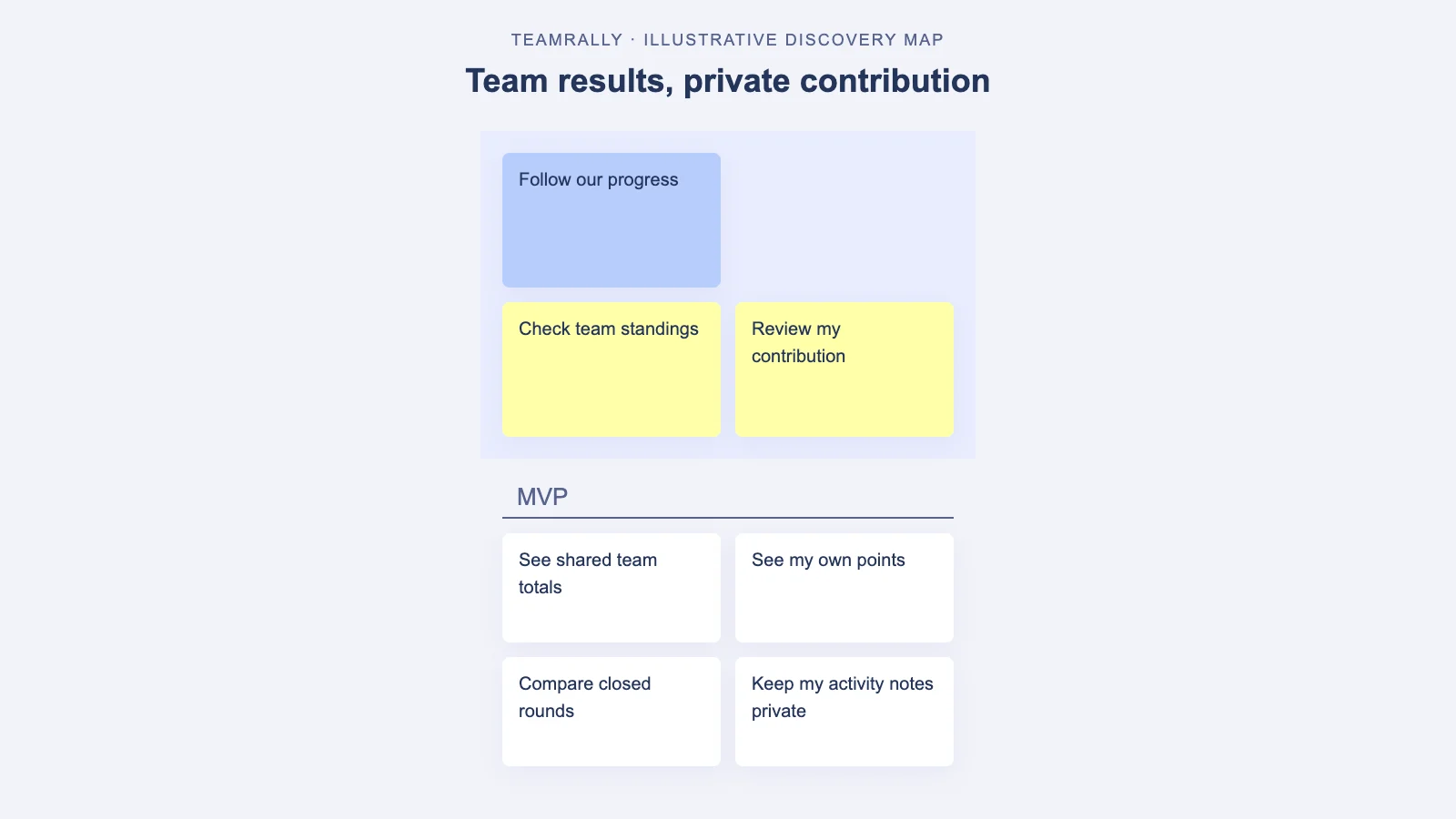
The documented direction separates them: shared team standings, with a private view of my own contribution. Individual movement entries and notes stay private, including from the organizer. A public individual ranking stays out until its purpose is clarified.
In this map fragment, both steps serve the same goal. Notice that visibility belongs in the story itself; “build leaderboard” would hide the decision again.
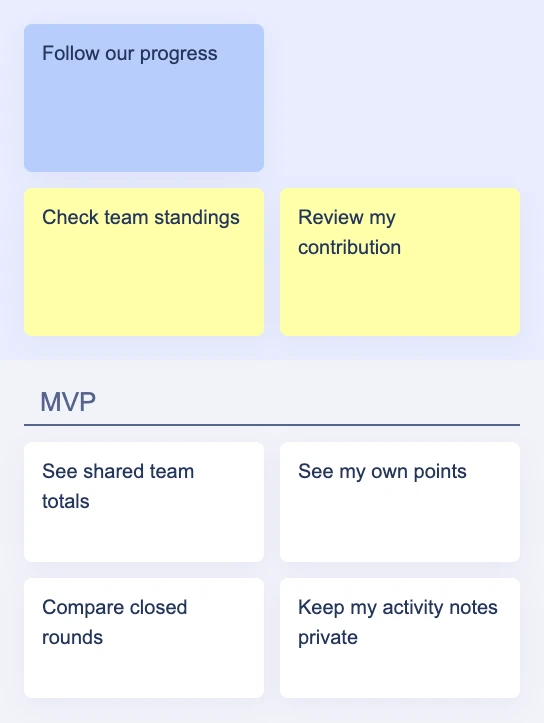
This makes review more concrete. A team total belongs in the shared view. A participant’s activity note does not. The organizer’s need to run the game does not automatically require access to everybody’s exercise log.
Make the decision survive the handoff
I would carry that distinction into the discovery brief before asking the creator skill to propose cards. With the StoriesOnBoard MCP connection, an agent can work with the board; the skills give that work its structure. Review the proposal, authorize the changes, then read the cards back.
My check would be simple: can a developer still interpret “contribution” as a public ranking? If yes, the decision has not survived the handoff.
For me, the value of this kind of AI-assisted discovery is the pause before implementation. One question makes me explain what I actually want people to experience. The penalty-role decision in the same game needs a similar pause.
Try it on your next score, badge, or dashboard: who sees this, and what behavior am I encouraging by showing it?